
How to Make Better Career Decisions: The Career GPS Framework

One of the most underrated skills professionals need today is knowing how to make better career decisions — not just how to get hired, but how to evaluate whether a path actually fits.
In a world of increasingly nonlinear careers, rapid technological disruption, and growing burnout among professionals, one important capability remains surprisingly underdeveloped: career management.
Not simply:
how to get recruited
how to optimize a resume
how to perform in interviews
But how to evaluate careers themselves.
Recently, I explored this topic through a workshop delivered in collaboration with MBA Exchange focused on helping MBA students and professionals think more systematically about long-term career decisions and career fit.
What became clear during the discussion is that many participants were highly informed about recruiting processes, but far less prepared to evaluate:
whether a career path actually fits them
whether a workplace culture aligns with how they operate
whether the trade-offs are sustainable
whether they are optimizing for prestige instead of long-term alignment
how to monitor and reroute careers over time
That distinction matters.
Because securing an offer and building a sustainable career are not the same thing.
Why It's So Hard to Make Better Career Decisions
Many career decisions are heavily influenced by:
prestige
salary
employer brand
time pressure
social comparison
These variables are understandable. But they are incomplete.
Careers are experienced internally, not externally.
A prestigious role that fundamentally mismatches someone’s motivations, energy patterns, workplace preferences, or tolerance for pressure often creates long-term friction:
burnout
disengagement
underperformance
drift
repeated career pivots without clarity
The workshop opened with this central question:
Why do intelligent, ambitious people still end up in careers that do not fit them well?
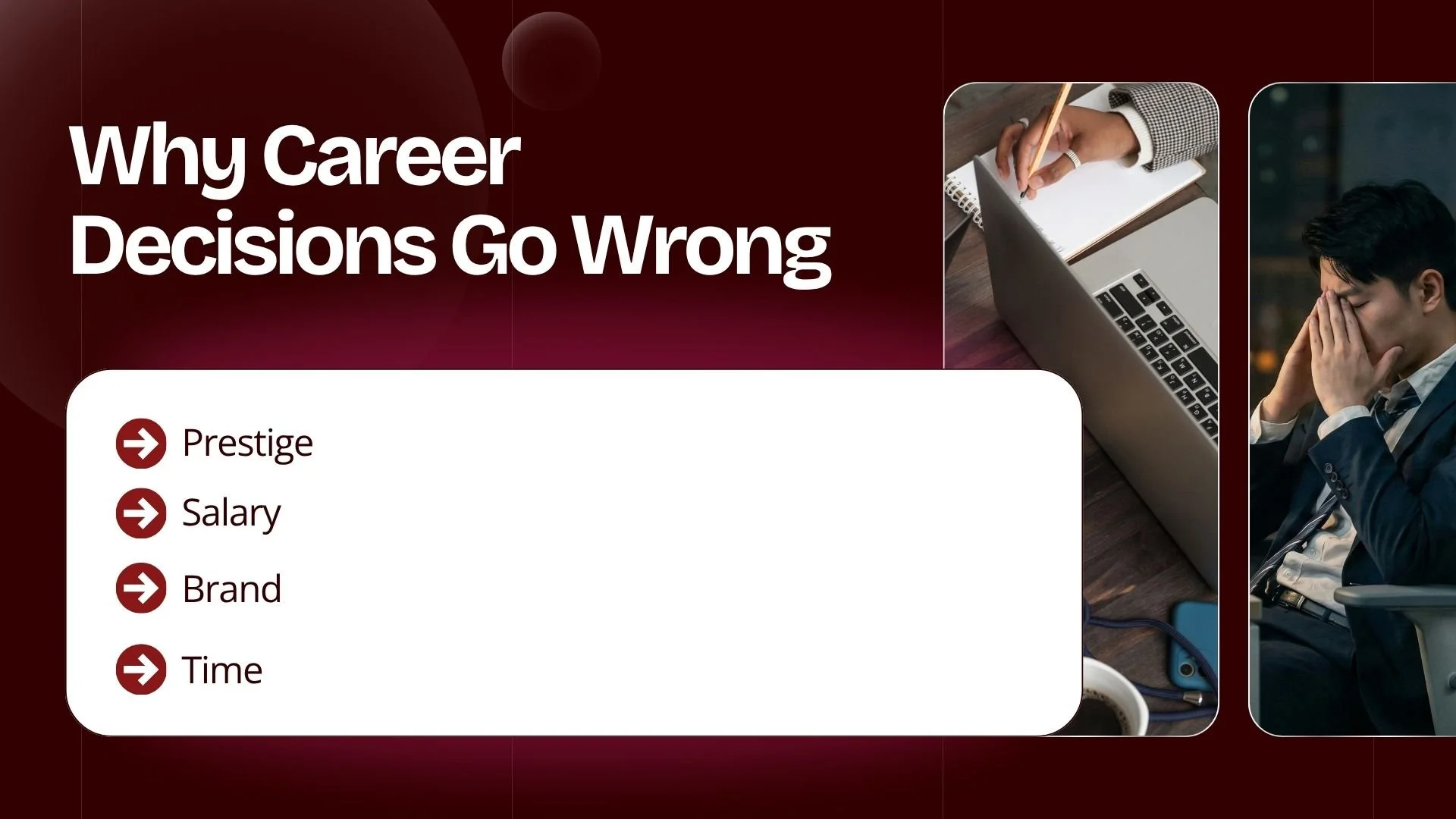
Many career choices are driven by prestige, salary, brand, and urgency rather than long-term fit and sustainability.
Career Management Is Different from Recruiting Preparation
Most business schools already provide valuable support around:
networking
interviewing
employer presentations
resume reviews
recruiting preparation
But career management addresses a different question.
It asks:
What environments help you thrive?
What type of work energizes you?
What sacrifices are you truly willing to sustain?
What workplace cultures fit you best?
What leadership environments help you grow?
What does success actually look like for you over decades?
Increasingly, the challenge is not simply getting opportunities.
It is learning how to evaluate and navigate them intelligently.
The Three Pillars of Career Success and Happiness
One of the core ideas explored during the workshop is that sustainable career navigation depends on three interconnected capabilities:
Self-knowledge
World knowledge
Monitoring and rerouting
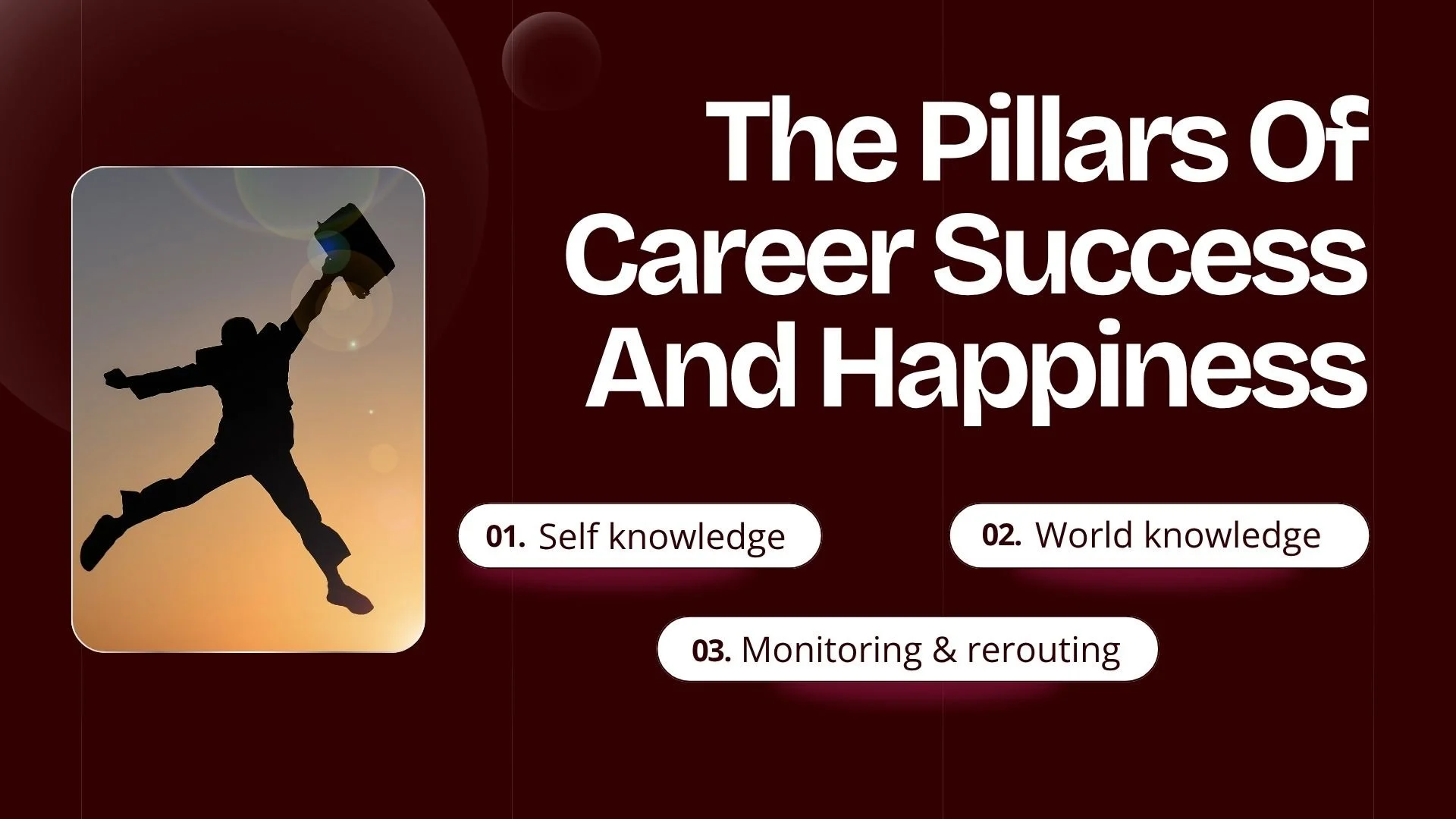
Career navigation requires understanding both yourself and the environments you operate within — while continuously adapting over time.
Most students receive substantial exposure to world knowledge:
industries
functions
companies
recruiting structures
But many receive far less structured support around:
self-orientation
career fit
employer due diligence
long-term sustainability
adaptation over time
And yet those capabilities may increasingly determine career resilience in a rapidly changing economy.
Career Fit Is More Than Choosing an Industry
Another key theme of the workshop was the idea that career fit operates at multiple levels:
career fit
employer fit
role fit
A career path may fit someone intellectually but not culturally.
An employer may offer prestige but create chronic misalignment.
A role may appear attractive externally but not match someone’s natural operating style.
The framework encourages students and professionals to think more systematically about:
workplace culture
leadership dynamics
team structure
lifestyle implications
actual day-to-day work realities
growth trajectory
organizational behavior
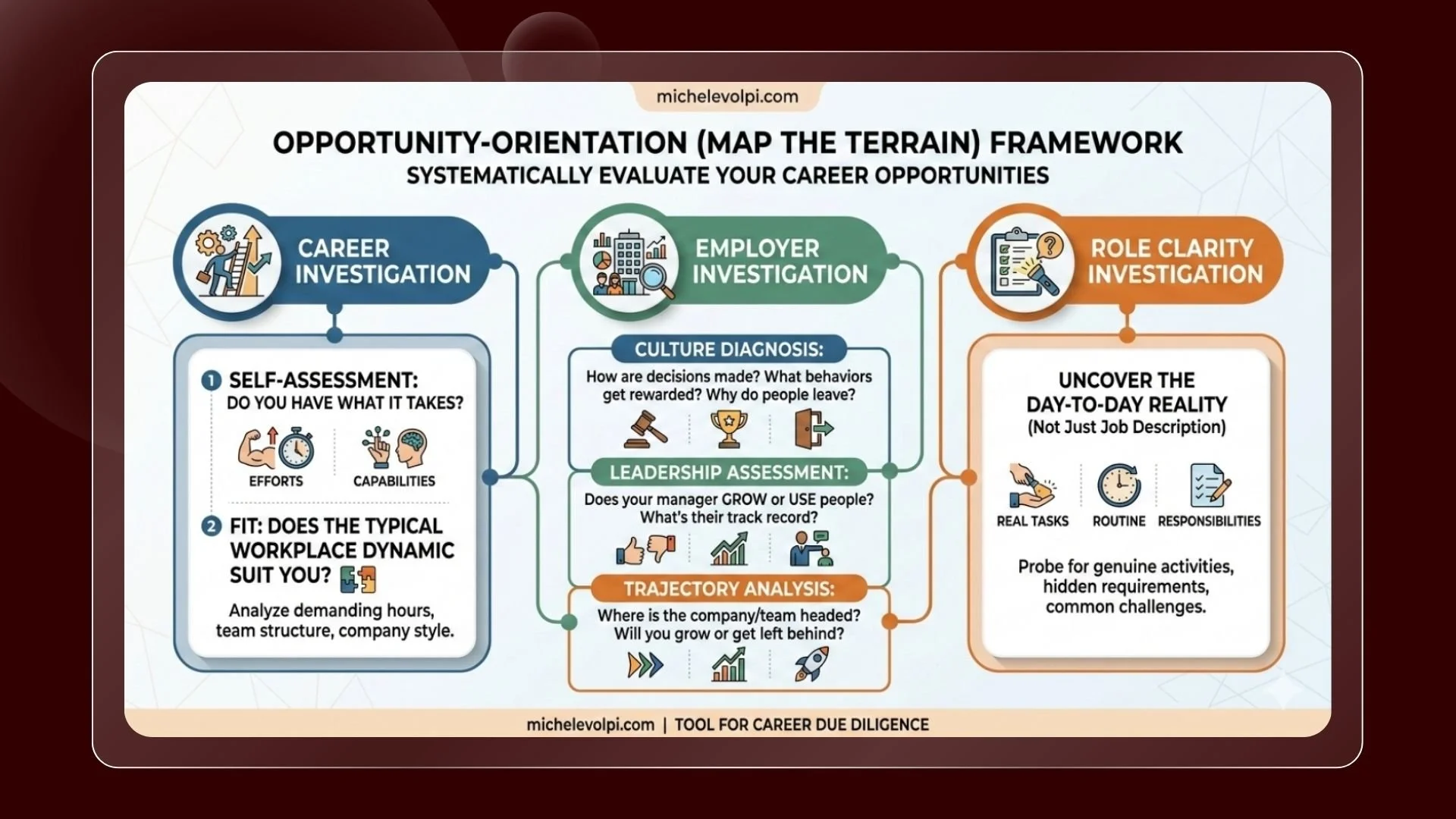
Career decisions should involve not only self-assessment, but also structured evaluation of employers, managers, culture, and role realities.
The Career Triangle
A central part of the workshop introduced the “Career Triangle” framework, which evaluates career alignment across three dimensions:
Ready
Willing
Able
In simple terms:
Are you ready for the sacrifices required?
Are you willing to operate in that environment and culture?
Are you naturally able to perform the type of work involved?
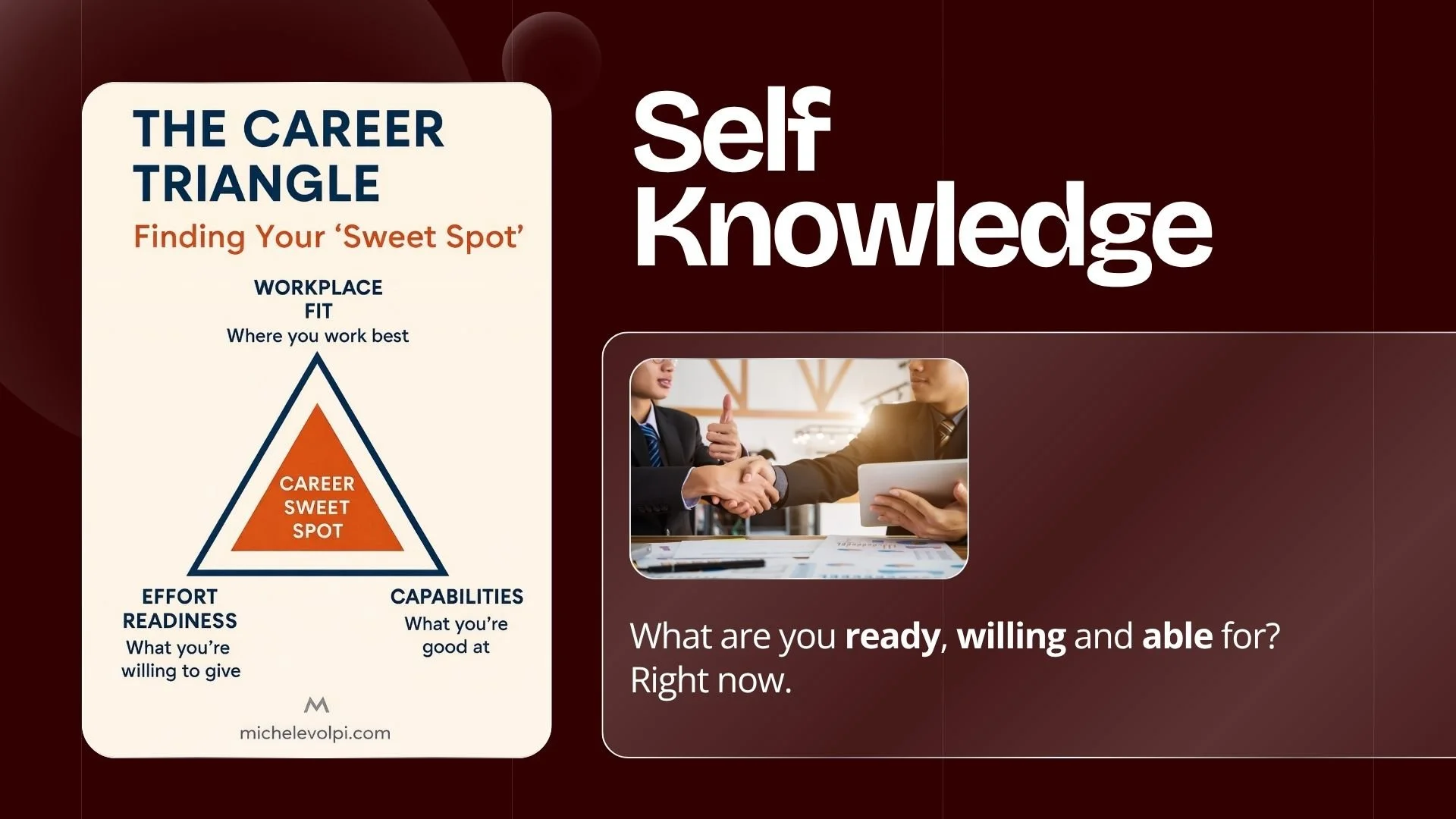
The Career Triangle framework helps individuals think more holistically about long-term career alignment.
This framework becomes especially powerful because it also explains different forms of career misalignment.
For example:
High Ready + High Able + Low Willing → burnout
High Willing + High Ready + Low Able → frustration
High Able + High Willing + Low Ready → drift
Rather than treating career dissatisfaction as purely emotional or motivational, the framework helps identify which dimension of fit is weak and where intervention may be needed.
Different Prestigious Careers Reward Different Types of Energy
During the workshop, we also compared investment banking and management consulting through the Career Triangle lens.
Both are selective, demanding, high-prestige environments.
But they reward different forms of energy. For example:
investment banking may reward endurance, hierarchy tolerance, precision, and operational rigor
management consulting may reward adaptability, communication, collaboration, and ambiguity tolerance
Neither is universally “better.”
But one may fit a particular individual significantly better over time.
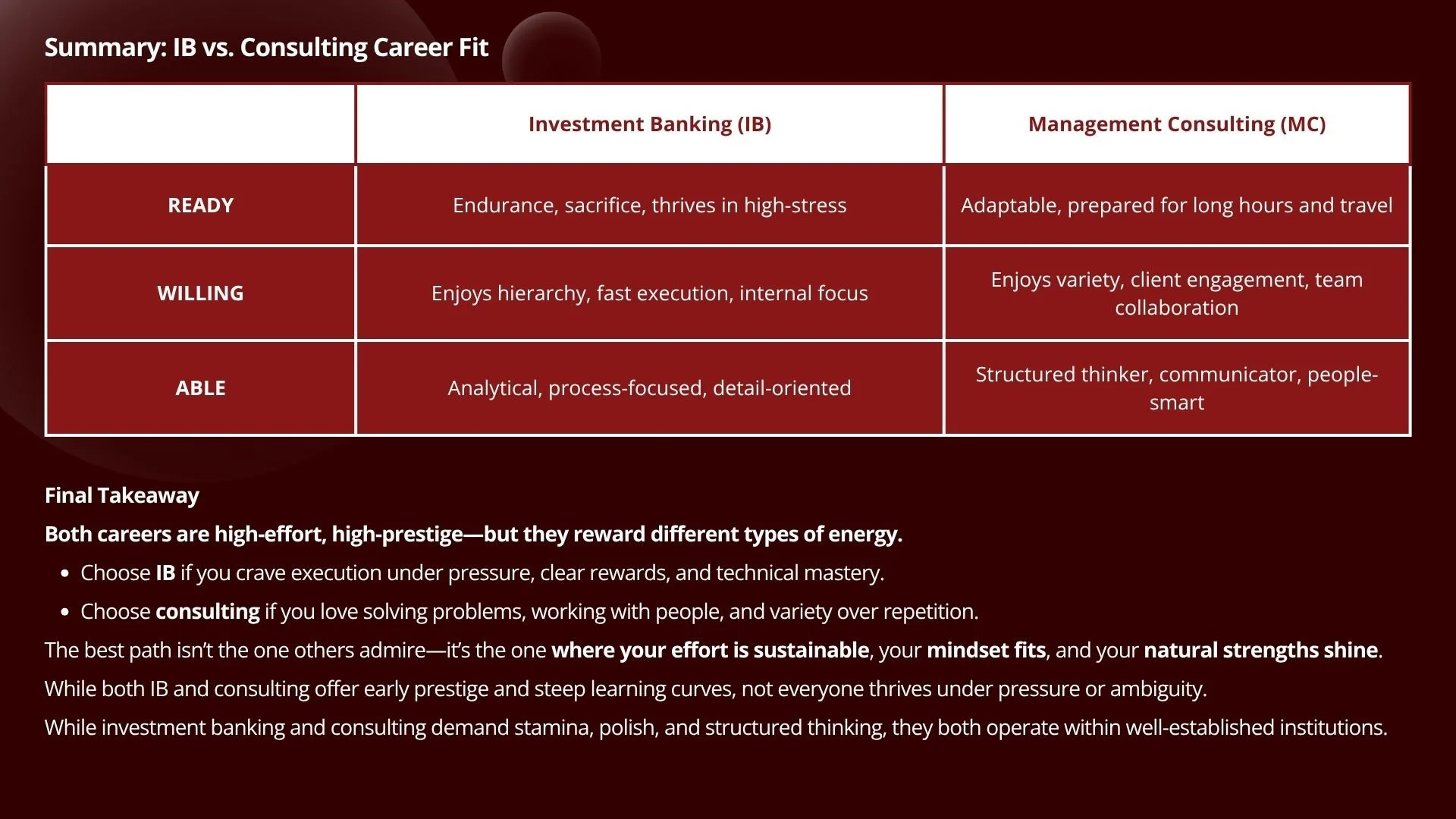
Different careers reward different psychological profiles, workplace preferences, and sustainable energy patterns.
This is one reason why recruiting preparation alone is insufficient.
Students and professionals increasingly need frameworks that help them evaluate:
sustainability
energy alignment
identity fit
work style compatibility
long-term motivation
Careers Require Monitoring and Rerouting
Another important realization explored during the workshop: career fit is not static.
People evolve.
Priorities shift.
Life events intervene.
Industries change.
A role that fit someone at 24 may no longer fit them at 34 or 44.
Which means career management is not a one-time decision. It becomes an ongoing navigation process.
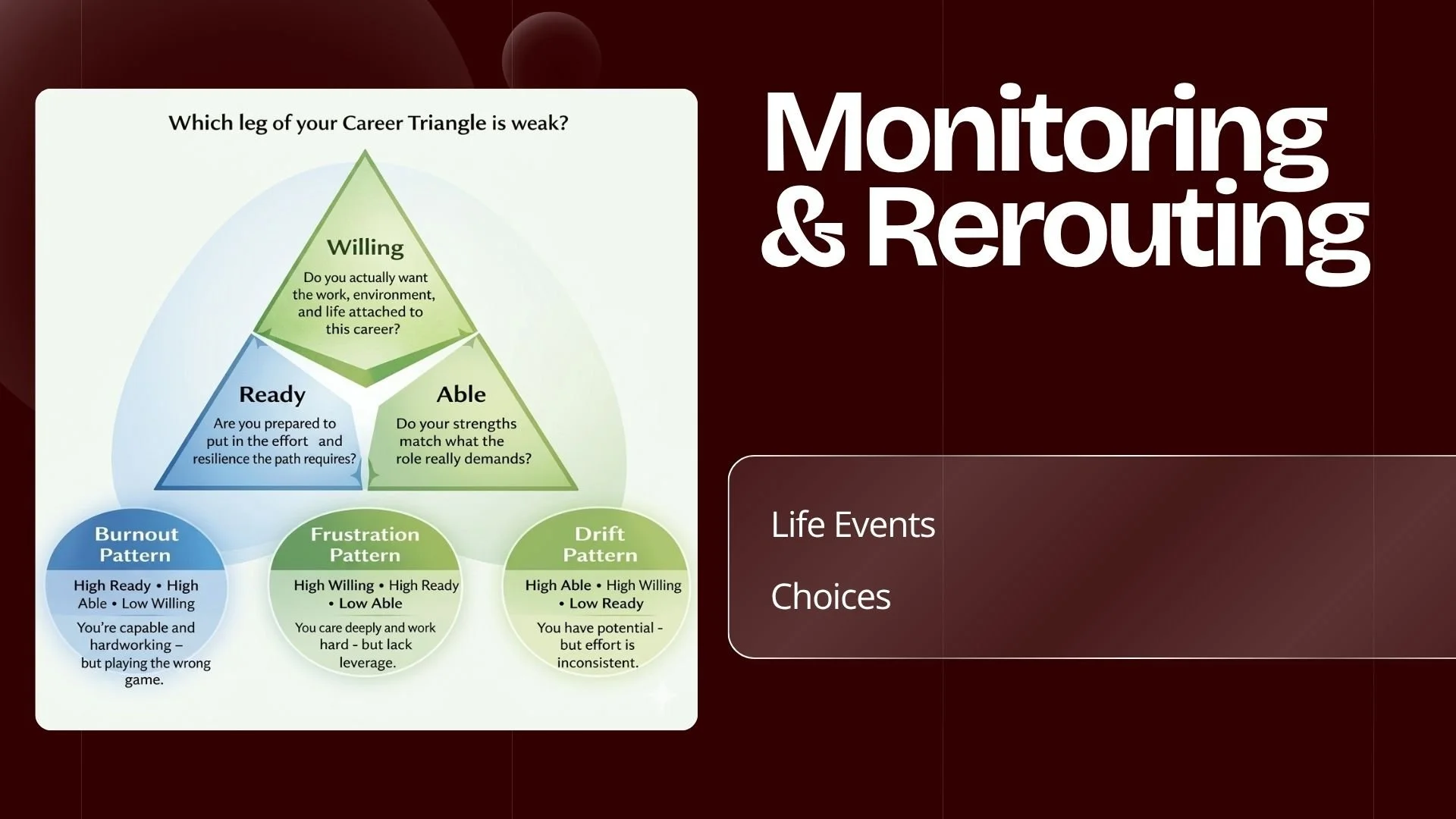
Careers require continuous monitoring, adaptation, and rerouting as individuals and circumstances evolve over time.
This may become one of the defining educational challenges of the next decade.
Because increasingly, the question is no longer simply:
“How do I get hired?”
But rather:
“How do I build a future that actually fits me?”
Should Career Management Become Part of the Curriculum?
I increasingly believe higher education has an opportunity to expand beyond recruiting support and treat career management as a real educational discipline.
Potential curriculum areas could include:
career fit analysis
workplace culture evaluation
employer due diligence
leadership assessment
career sustainability
long-term trade-offs
future-of-work adaptation
career rerouting strategies
organizational navigation
Not as motivational coaching.
But as structured decision-making.
Because the ability to navigate careers intelligently over decades may increasingly become one of the highest-ROI capabilities schools can provide.
Free Career Management Workshop Slides
Request access to the full Career Management Workshop Slides presented through MBA Exchange. Registered users can access the workshop slides immediately. New visitors are invited to register for free access.
Optional information such as your role, country, and school/program or organization helps us better understand who is engaging with these materials and may help shape future educational resources and collaborations.